|


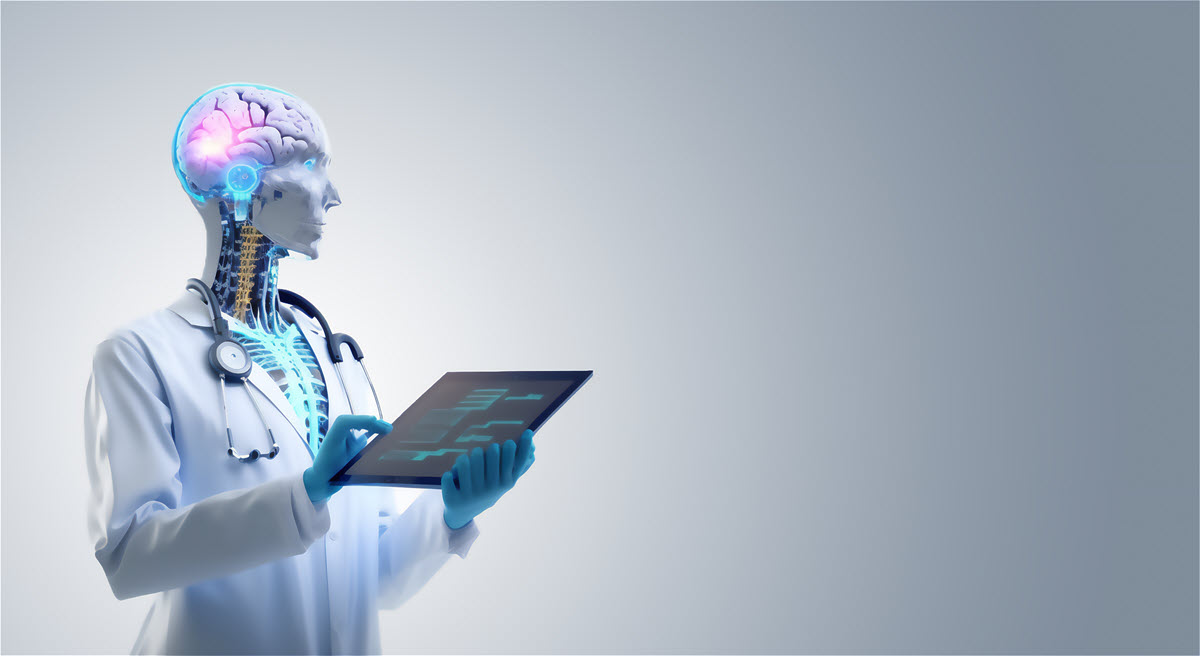
If you’ve visited a doctor recently, you might not have noticed anything different. The exam room probably looked the same. Your physician likely asked the same questions. But beneath the surface, something fundamental has shifted in how healthcare operates. We’ve moved past the experimental phase of AI in medicine and into something far more consequential: AI has become part of the core infrastructure of how doctors work, think, and care for patients.
The data from 2026 reveals a transformation that’s both more widespread and more subtle than the headlines suggest. This isn’t about robot surgeons or futuristic diagnostics (though those exist too). It’s about doctors reclaiming time, reducing errors, and fundamentally changing the economics of how medicine gets practiced. Here’s what’s actually happening behind the scenes.
AtlantiCare in New Jersey deployed an AI clinical assistant for ambient note generation and achieved something remarkable: 80% of participating clinicians adopted it, and it reduced documentation time by 42%. That translates to approximately 66 minutes saved per clinician per day.
Let that sink in for a moment. An hour. Every day. For context, the average physician spends more time on documentation than actually seeing patients, often finishing charts late into the evening in what the industry grimly calls “pajama time.” This isn’t a marginal improvement. It’s giving doctors back a significant portion of their professional lives.
Nearly 80% of relevant provider organizations are now using ambient speech solutions for note generation. These tools listen to patient-physician conversations in real time and automatically generate structured medical notes. Doximity reported that active users of its scribe tool nearly tripled in a single quarter in late 2025. This is no longer a pilot program. This is how medicine works now.
Here’s a statistic that should change how you think about your next doctor’s visit: approximately 66% of American physicians use AI for at least one use case, and 46% of nurses use it weekly. If you’re seeing a doctor in 2026, there’s a better than even chance AI is involved in your care in some way.
The invisibility is intentional. These aren’t flashy consumer-facing tools. They’re deeply integrated into clinical workflows. A physician might tap a button to start Doximity Scribe during your telehealth visit, or your cardiologist might use an AI algorithm to predict undiagnosed atrial fibrillation from your ECG data, or your prescription might be screened by an AI system to prevent dangerous drug combinations.
The gap between public perception and clinical reality is striking. While patients debate whether AI should be “allowed” in healthcare, doctors have already answered that question with their adoption patterns. The conversation has moved from “should we?” to “how do we do this responsibly?”
If you think AI adoption in American healthcare is aggressive, China is operating on a completely different timeline. Among surveyed professionals at Class 3 hospitals (the largest tier in China’s system), 86% are using AI-enabled software or devices.
This isn’t just a numbers game. Chinese public hospitals serve as the “core traffic hub” for AI deployment because of their ownership of medical data, giving them a structural advantage in training and implementing AI systems at scale. The speed of adoption reflects both policy support and a healthcare system under immense pressure to serve an enormous population efficiently.
What makes this particularly significant is that it creates a natural experiment. Within a few years, we’ll have real-world data on outcomes, efficiency gains, and unexpected challenges at a scale that simply doesn’t exist anywhere else. China isn’t just adopting AI in medicine faster; they’re generating the evidence base that will inform global healthcare for the next decade.
Misdiagnosis is one of medicine’s most persistent and dangerous problems. Estimates suggest that diagnostic errors affect millions of patients annually and contribute to thousands of preventable deaths. Now we have evidence that AI can make a meaningful dent in that number.
A study on an LLM co-pilot used during patient visits found a 16% reduction in diagnostic errors. That’s not a replacement for physician judgment. It’s augmentation. The AI cross-checks patient history against the latest medical guidelines and research, catches patterns a tired doctor might miss, and suggests alternative diagnoses that deserve consideration.
Tools like OpenEvidence and UpToDate Expert AI provide real-time assistance with targeted summaries of patient history and evidence-based treatment protocols. Doximity’s DoxGPT was preferred more than two times over its nearest competitor in head-to-head studies, partly because of proprietary advantages like deterministic drug references, ASCO guideline licensing, and peer review by over 10,000 physician experts.
This is the unsexy side of AI in healthcare, but it might be the most important. Incremental improvements in diagnostic accuracy, multiplied across billions of patient encounters, save lives at scale.
While most healthcare systems are integrating AI as a support tool, Saudi Arabia is pushing into genuinely experimental territory. The region launched the world’s first AI-operated clinic, where treatment plans are generated by an AI physician named “Dr. Hua” and then reviewed and approved by a human doctor.
This inverts the traditional model. Instead of a doctor who occasionally consults AI, it’s AI that generates the primary care plan with physician oversight. It’s a glimpse at what “human in the loop” might look like when taken to its logical conclusion in clinical settings.
The regulatory and liability questions here are enormous. Who’s responsible if the AI misses something the human reviewer also misses? How do you credential an AI system? What happens when Dr. Hua’s recommendations conflict with the supervising physician’s judgment? Saudi Arabia is essentially beta-testing the future of clinical workflow design, and the rest of the world is watching closely.
Some of the most striking AI applications in medicine are happening in highly specialized fields where pattern recognition makes a dramatic difference. AI-assisted embryo selection in IVF has increased treatment success rates by 20% in some settings.
For couples struggling with fertility, that’s not an abstract efficiency gain. It’s the difference between a successful pregnancy and another failed cycle. It’s thousands of dollars in treatment costs. It’s months or years of emotional toll.
The same pattern is emerging across specialties. Lunit INSIGHT CXR has analyzed approximately 1 million chest X-rays over three years at HMG facilities, looking for lung cancer, tuberculosis, and acute neurological conditions. HeartFlow provides end-to-end platforms that assist cardiologists from detection through treatment management. These aren’t general-purpose tools; they’re deeply specialized systems trained on specific medical challenges where subtle visual patterns make all the difference.
The shift from pilot programs to operational procurement is accelerating faster than most people realize. More than 100 health systems have signed for comprehensive AI suites, covering approximately 180,000 prescribers, which represents roughly 20% of US physicians.
What’s driving adoption isn’t just clinical benefits. It’s governance and risk management. Hospital administrators are recognizing that they need centralized, trusted AI platforms rather than allowing individual physicians to use whatever consumer AI tools they find online. Management expects greater enforcement of hospital AI controls, which favors established platforms over point solutions.
The adoption model is revealing: top-down governance approvals, followed by bottom-up physician usage. In other words, hospital systems are making institutional commitments to AI infrastructure, then letting clinical staff discover the applications that actually improve their workflows. This is how transformative technology gets embedded into complex organizations.
The data policy challenges are significant. Hospitals are focused intensely on HIPAA compliance and single-tenant cloud environments for protected health information. The primary technical barrier isn’t AI capability; it’s the lack of interoperability among vendors and the niche specialization that makes integration difficult.
What emerges from this data is a picture of medicine being quietly rewired. The doctor-patient relationship isn’t disappearing; it’s being freed from the crushing administrative burden that has made modern medical practice increasingly unsustainable. Physicians aren’t being replaced; they’re being augmented in ways that reduce errors, save time, and allow them to focus on the parts of medicine that require human judgment, empathy, and connection.
The most successful implementations aren’t the ones trying to automate physicians. They’re the ones giving doctors better tools to do what they’ve always done: diagnose accurately, treat effectively, and care deeply about patient outcomes. The technology is becoming invisible, which is exactly what good technology should do.
But this transformation raises profound questions. If 66% of American physicians are using AI while most patients remain unaware, what does informed consent look like? If diagnostic accuracy improves by 16% with AI assistance, does the standard of care shift such that not using AI becomes negligent? If China’s hospitals are generating vastly more real-world evidence on AI effectiveness than Western systems, who controls the insights that emerge from that data?
The answers to these questions will shape the next decade of healthcare. The technology is no longer experimental. The challenge now is figuring out how to deploy it responsibly, equitably, and in service of better patient outcomes rather than just operational efficiency.
Whether you’re a healthcare system exploring AI implementation, a medical practice trying to choose between ambient documentation platforms, or a health tech company building solutions for this market, you’re facing decisions with enormous consequences for patient care, regulatory compliance, and organizational sustainability.
At Kayla Technology Advisors, we exist to help businesses make smarter technology decisions, not just faster ones. Our role is advisory at the core: we guide, we simplify, and we stay focused on one outcome — helping our clients rise, lead, and win through technology that truly serves the business and, in healthcare, truly serves patients.