|


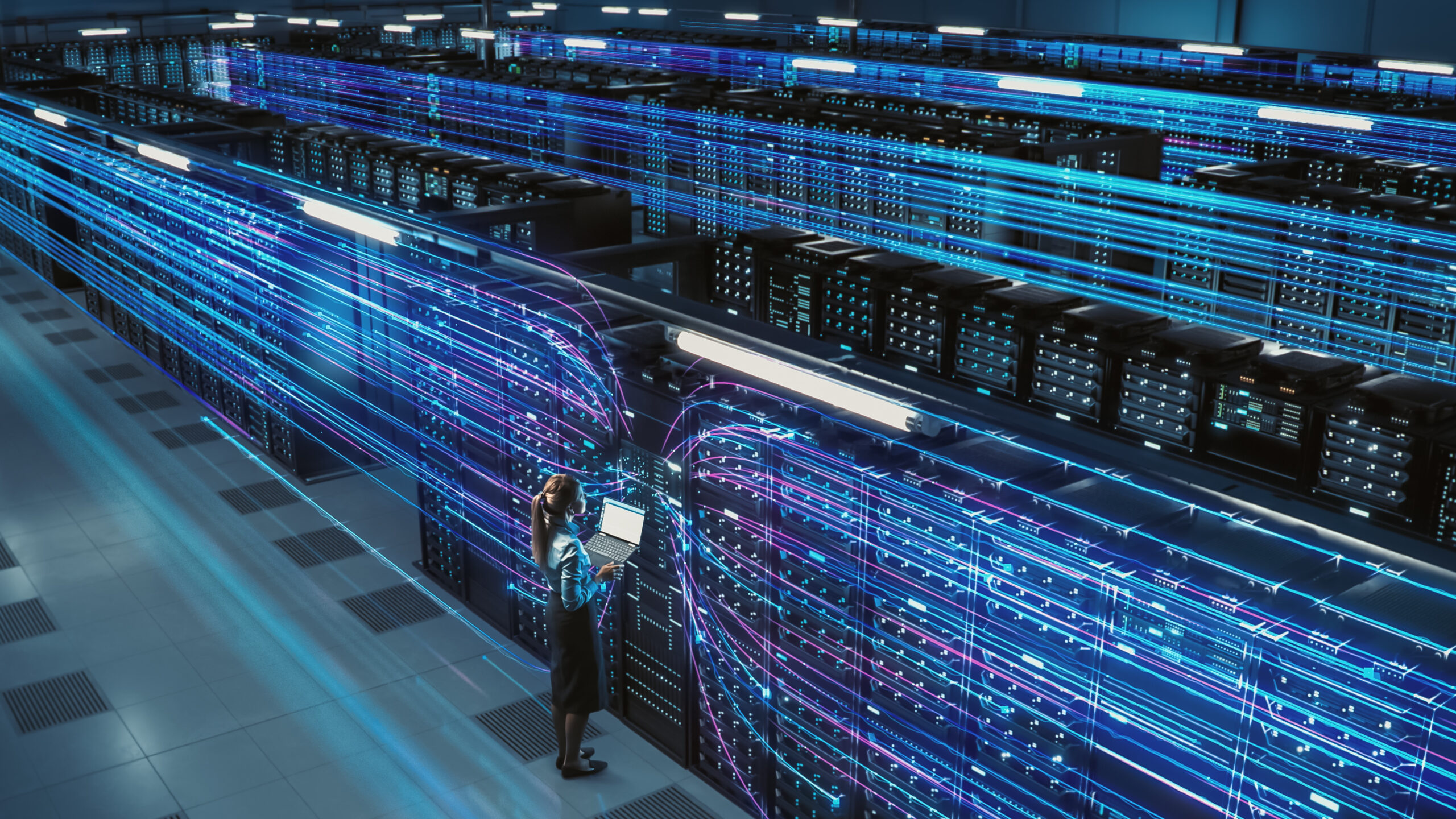
Global data center CapEx is expected to exceed $1 trillion in 2026. That number alone signals that what is happening in the data center market is not an incremental upgrade cycle. It is a structural transformation driven by AI infrastructure requirements that are fundamentally different from anything the industry has built before.
Here is what is actually happening across the major dimensions of this market.
AI-related workloads are projected to represent 71% of global data center compute by 2030. The transition from traditional CPU-based servers to high-density GPU clusters is not just a hardware refresh. It is a complete redesign of what data centers need to do and how they need to be built.
UBS characterizes the shift toward “AI Factories” as requiring a 20% uplift in facility costs compared to traditional centers, primarily driven by higher IT costs and specialized accelerators like NVIDIA Blackwell GPUs. The Battery Backup Unit server rack market is projected to reach $12.8 billion by 2032, reflecting the volatility management requirements of AI server power profiles that traditional UPS systems were not designed to handle.
Optical Circuit Switch adoption is accelerating alongside GPU cluster deployments. The global OCS market is expected to grow from $480 million in 2025 to $2.5 billion by 2029, driven by the need for network efficiency at the scale and speed that AI training and inference require.
The data center industry’s primary challenge in 2026 is not capital, demand, or technology. It is power availability. Every major analyst covering the sector has reached the same conclusion, and the Microsoft data center program manager interviewed earlier in this series confirmed it from an operational perspective.
Data centers could account for up to 17% of total US electricity demand by 2030. Grid interconnection queues are so backlogged that hyperscalers like Amazon are issuing warrants to secure capacity priority in constrained markets. The result is a significant shift toward Behind-the-Meter distributed generation: on-site power solutions that bypass grid interconnection entirely.
Others frame the dynamic precisely: demand is unconstrained, but “deliverability” is the main challenge. You can commit capital to a facility, secure the land, and order the equipment, and still not be able to power it on a timeline that makes business sense. Power availability, not construction speed or equipment lead time, is the gating factor for new supply.
Wall street notes that data center-related debt now accounts for nearly 3.5% of the high-yield index, reflecting the capital intensity of securing long-term power and infrastructure commitments at a scale the market has not previously attempted.
The US and mainland China are expected to account for roughly 80% of global demand growth through 2030. That concentration reflects both the location of hyperscaler headquarters and the AI development ecosystem, but the edges of that map are expanding quickly.
Southeast Asia is emerging as a critical expansion hub. Indonesia’s operational capacity is projected to triple by 2027, reaching 1.8 GW as the global AI cycle extends into ASEAN markets. South Korea’s local operators are accelerating dedicated AI data center plans to meet sovereign data requirements and localized enterprise demand. Singapore, Malaysia, Thailand, and the Philippines are all seeing investment that would have been considered speculative 18 months ago.
In Europe, the UK is projected to hold the highest data center capacity on the continent by 2030, but Europe overall is lagging behind US buildout speed. Regulatory pressure, sustainability mandates, and planning constraints are creating a more complex development environment than the US market, though the sovereign AI infrastructure demand described in earlier posts is driving dedicated regional investment that will compress the gap.
The Nordics continue to attract data center investment for the obvious reason: cooler ambient temperatures reduce cooling costs that are becoming a significant operational expense as power density increases.
One finding that does not appear in most data center investment analyses but has material implications: only 14% of Americans support having a data center in their own town. That sentiment has translated into 56 different local actions or bans against data centers across 25 US states.
NIMBY opposition to data center development is not a marginal phenomenon. It is a systematic constraint that affects site selection, permitting timelines, and community relations in ways that can delay or derail projects that are otherwise fully funded and technically sound. For any organization making long-term data center infrastructure commitments, understanding the community and regulatory environment of specific sites is as important as the power and connectivity analysis.
As covered in our GPU-as-a-Service post, NVIDIA Blackwell B200 and B300 processors draw up to 1,400 watts per chip. Traditional air cooling cannot manage that thermal load at scale. Immersion cooling is the fastest-growing segment in markets like the UAE, driven specifically by large-scale AI campus projects deploying GB300 systems.
The regulatory dimension is adding compliance pressure on top of the technical requirement. Germany has already mandated waste heat reuse and a transition to 100% renewable energy for data centers by 2027. Similar requirements are being developed across European markets.
For facilities being designed today, liquid cooling is a current design requirement rather than a future upgrade consideration. For existing facilities being retrofitted for AI workloads, liquid cooling infrastructure is typically the most operationally complex and costly element of the conversion.
| Dimension | Current State | Direction |
|---|---|---|
| Global CapEx | Exceeding $1 trillion in 2026 | Continuing to grow through 2029 |
| AI workload share | 71% of compute by 2030 | Accelerating |
| Primary constraint | Power availability | Behind-the-meter solutions expanding |
| Cooling requirement | Liquid cooling mandatory for AI density | Immersion cooling fastest-growing segment |
| Geographic concentration | US and China at 80% of growth | Southeast Asia and Nordics expanding |
| Community opposition | 56 local actions across 25 US states | Increasing as buildout accelerates |
| Facility cost premium | 20% above traditional centers | Rising with hardware density |
The data center market in 2026 is not experiencing a demand problem. It is experiencing a supply problem across multiple dimensions simultaneously: power availability, construction equipment lead times, liquid cooling installation capacity, and community and regulatory approvals. The capital is available. The demand is real. The constraint is the physical and regulatory infrastructure required to convert both into operational capacity.
For organizations making data center infrastructure decisions, the critical variables are power availability at specific sites, cooling infrastructure compatibility with next-generation hardware, and the community and regulatory environment that will govern permitting and expansion timelines.
The question worth sitting with: Are your data center infrastructure commitments accounting for the power, cooling, and regulatory constraints that are the actual gating factors for AI-ready capacity, or are they based on the assumption that capital and demand are sufficient to drive timely delivery?
At Kayla Technology Advisors, we exist to help businesses make smarter technology decisions, not just faster ones. Data center strategy in the current environment requires navigating a market where the constraints are physical and regulatory, not just financial and technical.
We help clients evaluate data center infrastructure options against the real constraint landscape, assess cooling and power requirements for AI workloads, and design infrastructure strategies that account for the 2029 stabilization environment rather than current peak-premium conditions. Our model is partnership over prescription. We listen first, understand your infrastructure requirements and planning horizon, and earn trust before any recommendations are made.