|

When a small or mid-size business starts getting serious about deploying AI agents, one of the first real infrastructure decisions hits fast: where do you actually run this thing?
For most of the cloud era, the answer was simple. You went with AWS, Azure, or Google Cloud and did not think much more about it. But the AI infrastructure landscape in 2026 looks meaningfully different. A new category of provider, neoclouds, has emerged specifically to serve AI workloads, and for SMBs trying to balance performance, cost, and simplicity, the choice between these two paths is more consequential than it might appear.
Here is what the research actually shows about how these two models differ, and what SMBs should be thinking about when making this decision.
This is the foundational distinction, and it shapes every other trade-off in the comparison.
Traditional hyperscalers like AWS, Azure, and Google Cloud are generalists. Their value proposition is massive scale, global reach, and the ability to bundle AI services with storage, networking, databases, security tools, compliance frameworks, and hundreds of other services under one roof. They are designed to be the only cloud vendor you ever need.
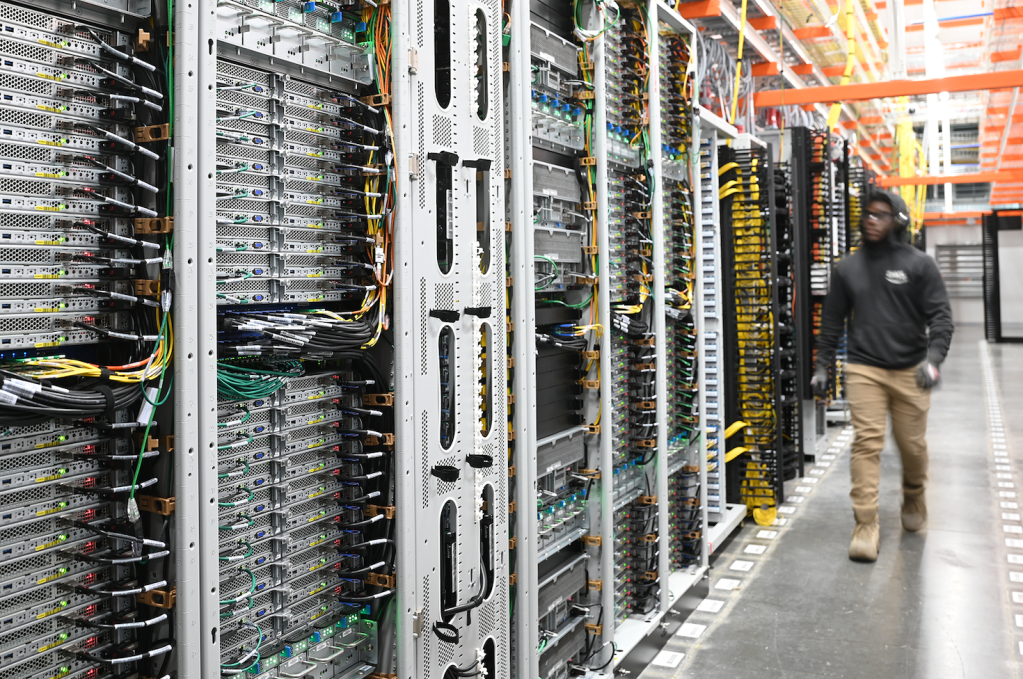
Neoclouds like CoreWeave, Lambda Labs, and Nebius are specialists. Their entire infrastructure is engineered around high-intensity AI workloads, featuring high-density GPU clusters, optimized networking architectures, and bare-metal or near-bare-metal access that minimizes the performance overhead that comes with virtualization.
For SMBs running AI agents that require consistent, high-performance inference, that specialization translates into a real performance-per-dollar advantage on the specific task of running AI. For SMBs that need a broad range of cloud services integrated under one billing relationship, the hyperscaler ecosystem breadth is harder to replicate.
The choice is not about which is better in the abstract. It is about which model fits what you are actually trying to do.
Here is a practical differentiator that does not get enough attention in vendor comparisons.
Hyperscaler pricing is notoriously complex. You are billing across compute, storage, egress, API calls, managed services, support tiers, and a matrix of reserved versus on-demand pricing that can make it genuinely difficult to predict your monthly spend before the invoice arrives.
Neocloud pricing is typically structured around simple, transparent hourly GPU rates. You know what you are paying for and roughly what it will cost before you commit.
For SMBs managing tight technology budgets without dedicated cloud finance functions, that transparency is not a minor convenience. It is a meaningful operational advantage. Cost unpredictability is one of the primary reasons SMBs pull back from cloud AI experimentation. A billing model that is easier to reason about removes a real friction point from the adoption process.
One of the more surprising findings in the research involves deployment speed. Neoclouds prioritize rapid provisioning, often leveraging modular data center designs that allow them to bypass the long build cycles typical of hyperscaler facilities.
For an SMB that needs GPU capacity quickly, whether to hit a product launch deadline or scale a customer-facing agent for a seasonal demand spike, neocloud providers are often more willing and able to provision the latest accelerators on a flexible timeline. They also accept more of the hardware obsolescence risk themselves, which means customers are less likely to find themselves locked into aging infrastructure.
Hyperscalers, by contrast, are optimized for massive, sustained scale. Their capital discipline and global fleet standardization are features for enterprise customers running predictable, long-horizon workloads. For SMBs with more dynamic or experimental needs, that standardization can feel more like a constraint.
Neoclouds act as capacity buffers, absorbing specialized AI demand that hyperscalers may struggle to satisfy quickly due to internal capital discipline or supply constraints.
The most honest argument for sticking with a hyperscaler is ecosystem depth. And for many SMBs, it is a compelling one.
Hyperscalers provide integrated tools for data management, security, compliance, identity, monitoring, and application development that neoclouds are still building toward. If your SMB is already running on Microsoft 365 and Azure Active Directory, deploying AI agents through Azure AI services creates a level of integration continuity that a standalone neocloud cannot easily match.
Neoclouds are aware of this gap and are increasingly investing in orchestration tools that support hybrid and multi-cloud environments. The goal is to let SMBs run inference workloads on specialized neocloud infrastructure while keeping ancillary services on hyperscaler platforms. That hybrid approach is gaining traction, but it adds architectural complexity that needs to be managed.
The practical question for SMBs is not “hyperscaler or neocloud?” but “what services am I actually buying, and where is each of them best sourced?”
One consideration that comparative analyses often underweight is switching cost in the broadest sense.
If your SMB has already invested in a hyperscaler ecosystem, including data pipelines, identity management, compliance tooling, and developer familiarity, the performance-per-dollar advantage of a neocloud has to be weighed against the integration work required to use it.
For SMBs starting fresh with an AI agent deployment, or for those running workloads that are genuinely compute-intensive and relatively self-contained, neoclouds offer a compelling combination of speed, transparency, and specialization.
For SMBs with existing cloud commitments and a need for broad service integration, the hyperscaler path often remains the path of least operational friction, even if the raw GPU economics are slightly less favorable.
Neither answer is wrong. The right answer depends on where you are starting from.
The neocloud versus hyperscaler decision for SMBs is ultimately a trade-off between specialization and integration. Neoclouds win on GPU performance, pricing transparency, provisioning speed, and flexibility. Hyperscalers win on ecosystem breadth, integrated tooling, and compatibility with existing enterprise investments.
As the AI infrastructure market matures, these categories are converging. Hyperscalers are building more AI-native services. Neoclouds are building broader platform capabilities. But for SMBs making infrastructure decisions today, the distinctions are real and consequential.
The question worth sitting with: Are you choosing your AI hosting infrastructure based on your actual workload requirements, or based on familiarity and inertia?
At Kayla Technology Advisors, we exist to help businesses make smarter technology decisions, not just faster ones. Infrastructure choices like this one sit at the intersection of technical requirements, budget constraints, and long-term vendor strategy, which is exactly where independent advisory guidance creates the most value.
We help SMBs evaluate hosting options without an agenda, understand the total cost picture beyond the sticker price, and build AI infrastructure strategies that scale with the business rather than against it. Our model is partnership over prescription. We listen first, understand your environment, and build trust before any recommendations are made.
If you are working through an AI infrastructure decision and want a clear-eyed perspective, we would love to be part of that conversation.