|

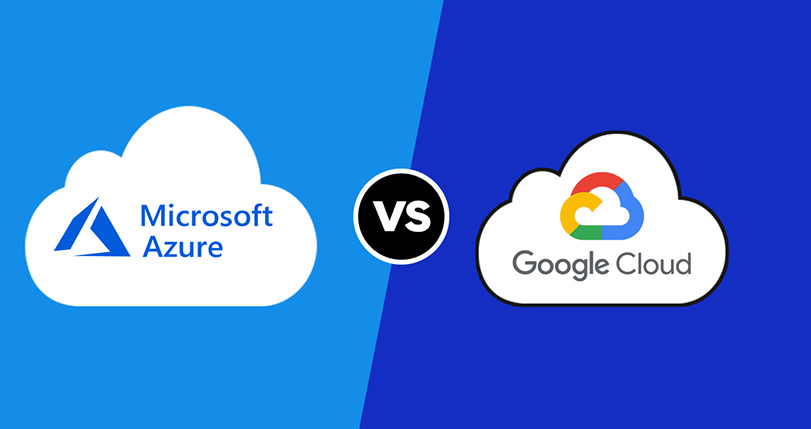
Microsoft Azure and Google Cloud are no longer competing on who can build data centers faster. They’re competing on fundamentally different visions of how enterprises should operate, and the choice between them will shape your technical architecture for the next decade. Here’s what the data reveals.
Azure remains the primary cloud provider for 45% of CIOs, while 32% express long-term spending intentions for Google Cloud. That gap matters, but the trend matters more.
When asked why they’re increasing cloud spending, most respondents cited business needs driving demand for Azure and AWS services. For Google Cloud? Superior AI and machine learning capabilities.
Google is closing the gap through aggressive pricing and improved product quality, specifically targeting Microsoft 365 users in the collaboration space. The strategy is working. Large enterprises like Calix are adopting Google Cloud specifically for business insights and differentiation against traditional AWS or Azure deployments.
The battlefield has shifted from general-purpose cloud to specialized AI infrastructure, and Google is winning mindshare in the category that defines future growth.
Microsoft is described by experts as being “10 light years ahead” in providing a full ecosystem connecting on-premises and cloud environments. This isn’t about Azure’s technical superiority. It’s about Microsoft 365, Teams, Dynamics, and the tight coupling of Azure with enterprise software that companies already depend on.
Azure’s strategy centers on embedded cost governance seamlessly aligned with existing financial tools like Microsoft Fabric and Entra ID. The integration with Azure Policy and enterprise budgeting workflows makes cost management feel native rather than bolted on.
Microsoft bundles AI capabilities like Copilot within the existing software stack to drive consumption. You’re not choosing Azure for AI. You’re choosing Azure because you’re already paying for Microsoft licenses, and adding Azure workloads feels frictionless.
Google can’t replicate this advantage. They don’t own your productivity suite, your identity provider, or your enterprise application layer. What they offer instead is performance and price.
Google Cloud leverages proprietary TPUs to provide materially lower costs for AI compute compared to traditional hardware. This isn’t marketing. It’s silicon economics translating to different unit costs for training and inference workloads.
Google is positioning itself as a specialized provider for high-performance and regulated AI workloads, offering better unit economics for performance-sensitive tasks. The revenue model is primarily consumption-based fees for infrastructure and the Vertex AI platform, with subscriptions for Gemini Enterprise and Google Workspace competing for organizations choosing enterprise solutions.
Azure relies more heavily on NVIDIA GPUs and standard compute infrastructure, integrating AI through software layers rather than custom silicon. The approach works for general-purpose workloads but creates cost disadvantages for organizations running massive AI training jobs or requiring specialized accelerator performance.
The strategic question: Are your AI workloads significant enough to justify optimizing for Google’s infrastructure, or do you value Azure’s ecosystem integration more than raw compute economics?
Microsoft Azure suffered a major outage disrupting websites across multiple regions. Google Cloud experienced a three-hour outage affecting over 70 services. Neither provider can claim reliability superiority.
This matters because reliability was supposed to be the enterprise argument for cloud adoption. Yet both platforms demonstrated that even hyperscale infrastructure faces systemic failures. The implication: multi-cloud redundancy isn’t paranoia, it’s risk management.
Enterprises betting entirely on Azure’s ecosystem integration or Google’s AI performance are accepting single-provider risk. The outages in 2025 reminded organizations that vendor diversification has value beyond cost optimization.
Azure excels at hybrid workloads and integrated enterprise ecosystems. Google Cloud excels at high-performance AI infrastructure and data-centric workloads. The competition isn’t about who builds a better generic cloud. It’s about which specialized capabilities align with your strategic priorities.
Azure’s tight coupling with the enterprise software stack makes it the default for companies already invested in the Microsoft ecosystem. Google’s specialized, high-efficiency AI infrastructure and sovereign cloud zones make it the choice for organizations prioritizing AI performance and data residency requirements.
Revenue models reflect this specialization. Azure drives revenue through subscriptions and consumption-based platform fees, leveraging existing customer relationships. Google relies on consumption-based fees for infrastructure, competing on technical merit rather than ecosystem lock-in.
The market is bifurcating. General-purpose enterprise workloads flow to Azure because of ecosystem gravity. Specialized AI and data workloads flow to Google because of performance and cost advantages.
Choosing between Azure and Google Cloud in 2026 isn’t about feature checklists. It’s about whether you’re optimizing for ecosystem integration or specialized performance, and whether your AI workloads justify breaking from Microsoft’s gravitational pull. The answer depends on what you’re building, not what analysts recommend.
The Azure vs Google Cloud decision isn’t binary, and it’s rarely permanent. At Kayla Technology Advisors, we help enterprises map workload characteristics to platform strengths, designing hybrid strategies that leverage Azure’s ecosystem advantages for operational systems while exploiting Google Cloud’s AI economics for specialized workloads. We evaluate your existing Microsoft investments, AI roadmap, data sovereignty requirements, and team capabilities to determine which platform combination positions you for success. Our advisory approach means we’re optimizing for your business outcomes, not vendor relationships. We help you avoid both the trap of Microsoft lock-in that ignores better alternatives and the trap of chasing Google’s AI hype without understanding total cost of ownership. The goal is strategic clarity that lets you execute with confidence, knowing your cloud architecture serves your business rather than constraining it.